Rabu, 28 Agustus 2019

Peloton's IPO shows the company is serving the wealthy, but not making us healthy - CNBC

John Foley, CEO of Peloton.

Adam Jeffery | CNBC

Peloton, the company that brings spin classes to your living room, has turned the combination of fitness and connected gadgets into a business that's big enough for the public markets.

In its IPO prospectus released on Tuesday, the maker of home stationary bikes and treadmills attributed its growth — more than 100% in the past year — to the "growing awareness of the benefits of exercise and physical activity." The company said that over the past two decades, even in times of recession, the fitness industry has grown in the U.S. and abroad.

But Peloton suffers from the same deficiency that plagues other digital health products and services like activity trackers, personal training apps and fitness classes. It's not actually moving the needle when it comes to the country's health.

More than 1 in 3 Americans are considered obese, which adds up to at least $147 billion in costs a year to the overburdened health-care system. Type 2 diabetes is on the rise, and about 610,000 people die of heart disease every year in the U.S., according to the Centers for Disease Control and Prevention. There's a tight relationship between income level and risk of cardiovascular disease.

The Peloton bike costs more than $2,200 for the most basic package, and that doesn't include the monthly fees for classes. That's far out of reach for millions of Americans, who are living paycheck to paycheck. For the company to have a real impact on the health crisis it would need to reach not just urbanites who love the convenience, but also the parts of the population most in need of easy-to-use fitness services.

Peloton isn't trying to fool anyone about its target market. The company was mocked earlier in the year in a viral tweet thread that poked fun at its ads, which are clearly aimed at the wealthy.

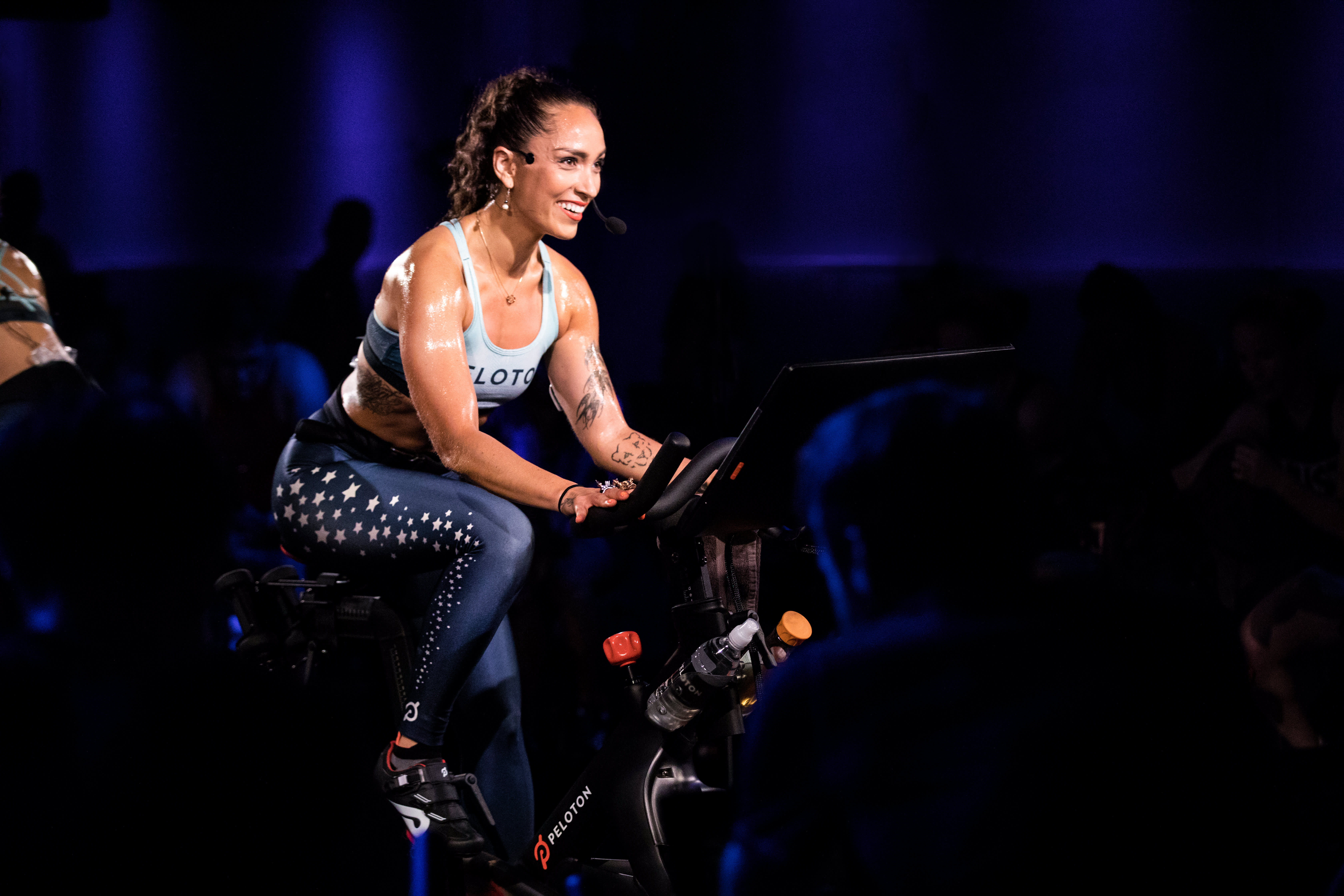
Robin Arzón, vice president of fitness programming at Peloton

Photo courtesy Peloton

"These models are expensive and are excluding a lot of people," said Iyah Romm, CEO of Cityblock Health, an urban health initiative that focuses on low-income communities. "And there's the question of whether it's even relatable to diverse populations."

Peloton has more than 500,000 customers using its paid subscription service, up from just over 245,00 a year ago. Revenue climbed to $915 million in the 12 months that ended June 30, up from $435 million the prior year.

"We believe that busy lifestyles, less free time and changing household dynamics are driving demand," Peloton said in the filing.

People with low incomes also fit those categories, but they simply can't afford the services. And Peloton, which is already losing money, has to put even more emphasis on profit margins as it looks at attract public market investors.

"We've inadvertently designed a society where it's hard to be healthy," said Steve Downe, chief technology and strategy officer for the Robert Wood Johnson Foundation. "So many of the solutions aren't available to most people."

WATCH: Peloton files for IPO under ticker PTON

Let's block ads! (Why?)


https://www.cnbc.com/2019/08/28/peloton-ipo-shows-company-serving-wealthy-not-making-us-healthy.html

2019-08-28 12:25:12Z
52780365842179

Selasa, 27 Agustus 2019

Costco opened its first China flagship store -- and things got crazy - New York Post

It was an open-and-quickly-shut deal.

China’s flagship Costco outlet opened its doors Tuesday morning in suburban Shanghai, only to close them several hours later after the store became swamped with mobs brawling over discounted items, Bloomberg reported.

Clips circulating on Weibo and other Chinese social media show customers crammed in aisles, playing tug-of-war with raw poultry and elbowing other shoppers out of the way.

“There’s no other word to describe it but crazy,” marveled one Weibo poster.

Shoppers queued in checkout lines for over half an hour received messages from Costco — first warning them to avoid the store during peak hours, and then at approximately 2 p.m. to avoid coming altogether, according to news blog Shanghaiist.

The American retail giant chalked up the temporary closure to “heavy traffic and customer flows,” according to BNN Bloomberg.

It was unclear if the store would open Wednesday.

Let's block ads! (Why?)


https://nypost.com/2019/08/27/costco-opened-its-first-china-flagship-store-and-things-got-crazy/

2019-08-27 18:49:00Z
52780365236776

Former Star Google and Uber Engineer Charged With Theft of Trade Secrets - The New York Times

SAN JOSE, Calif. — Anthony Levandowski, one of Silicon Valley’s foremost technologists on self-driving cars, was charged by federal prosecutors on Tuesday with 33 counts of theft and attempted theft of trade secrets from Google.

The criminal charges from the United States Attorney’s Office of the Northern District of California open a new chapter in a legal battle that has embroiled Google, its self-driving car spinoff Waymo and rival Uber in the high-stakes contest over autonomous vehicles. The case also highlights Silicon Valley’s no-holds-barred culture, where gaining an edge in new technologies versus competitors can be paramount.

It is not uncommon for tech companies, which fiercely guard their intellectual property, to sue former employees or the firms they join after they leave. But criminal charges against a senior executive for theft is unusual.

According to the complaint, Mr. Levandowski, who worked on self-driving cars at Google, downloaded more than 14,000 files containing critical information about Google’s autonomous-vehicle research before leaving the company in 2016. He then made an unauthorized transfer of the files to his personal laptop, the complaint said. Mr. Levandowski joined Uber later that year when the ride-hailing firm bought his new self-driving trucking start-up, which was called Otto.

Some of the files that Mr. Levandowski took from Google included private schematics for proprietary circuit boards and designs for light sensor technology, known as Lidar, which are used in self-driving cars, according to the complaint.

“The Bay Area has the best and brightest engineers, and they take big risks,” said John Bennett, the F.B.I. special agent in charge of the San Francisco Division, at a news conference on Tuesday. “But Silicon Valley is not the wild West. The fast-paced and competitive environment does not mean federal laws do not apply.”

The U.S. attorney’s office said Mr. Levandowski, 39, turned himself in at the federal courthouse in San Jose this morning. If convicted, Mr. Levandowski could face a maximum of 10 years in prison, a $250,000 fine for every count and additional restitution.

“All of us are free to move from job to job,” said David L. Anderson, United States attorney in the Northern District of California. “What we cannot do is stuff our pockets on the way out the door.”

Mr. Levandowski’s lawyers, Miles Erlich and Ismail Ramsey, said in a statement that he didn’t steal anything from anyone.

“This case rehashes claims already discredited in a civil case that settled more than a year and a half ago,” they said. “The downloads at issue occurred while Anthony was still working at Google — when he and his team were authorized to use the information. None of these supposedly secret files ever went to Uber or to any other company.”

Image
CreditJeff Chiu/Associated Press

Uber said in a statement that the company “has cooperated with the government throughout their investigation and will continue to do so.”

Suzanne Philion, a spokeswoman for Waymo, said the company has “always believed competition should be fueled by innovation, and we appreciate the work of the U.S. Attorney’s Office and the F.B.I. on this case.”

The charges follow a settlement between Waymo and Uber in a trade secrets case. In February 2017, Waymo had accused the ride-hailing firm, Mr. Levandowski and others of stealing self-driving car technology. That case went to trial in San Francisco in February 2018, riveting the tech industry with testimony about the inner workings of technology companies, rivalries among billionaire tech entrepreneurs and the cutthroat competition for engineering talent.

Four days into the trial, Uber and Waymo settled, with Uber agreeing to provide 0.34 percent of its stock to Alphabet, the parent company of Waymo and Google. But Mr. Levandowski’s situation was not resolved by the settlement. The federal judge in the case referred it to the United States Attorney’s Office for a possible criminal inquiry into Mr. Levandowski’s behavior.

Mr. Levandowski was a pioneer in autonomous-vehicle research. He became known for the technology as a graduate student at the University of California, Berkeley, in 2004, when he designed a self-driving motorcycle that was entered in the Pentagon’s first contest for autonomous vehicles.

At Google, which Mr. Levandowski joined last decade, he was a confidant of Larry Page, one of the company’s co-founders. Mr. Levandowski ended up leading many aspects of the self-driving program inside the company’s clandestine “Google X” division. Google’s self-driving car unit was later spun off into Waymo.

In 2016, Mr. Levandowski left Google to form Otto, a self-driving trucking start-up. He took a small army of Google engineers along with him. Otto was quickly acquired by Uber for nearly $700 million. The deal was driven by Travis Kalanick, Uber’s chief executive at the time, who had a vision of building a fleet of self-driving robotaxis that would replace Uber’s hundreds of thousands of human drivers.

In 2017, Waymo sued Uber, Mr. Levandowski and Otto for theft of trade secrets.

“Otto and Uber have taken Waymo’s intellectual property so that they could avoid incurring the risk, time and expense of independently developing their own technology,” Waymo said in its suit.

The relationship between Uber and Mr. Levandowski quickly went south. After invoking his Fifth Amendment right to avoid self-incrimination in the Waymo case, Mr. Levandowski was terminated by Uber in May 2017.

“Uber regrets ever bringing Anthony Levandowski on board,” one of Uber’s lawyers said during the trial last year. “All Uber has to show for Anthony Levandowski is this lawsuit.”

Mr. Levandowski, who made millions of dollars from his work and through sales of his start-ups, has not stepped back. In December, he gave an interview to The Guardian about his new self-driving start-up, Pronto.AI, in which he claimed that he built a car that had driven from San Francisco to New York without human intervention.

Let's block ads! (Why?)


https://www.nytimes.com/2019/08/27/technology/google-trade-secrets-levandowski.html

2019-08-27 18:07:00Z
52780365705892

Uber and Lyft's driver take rates higher than they say: Jalopnik - INSIDER

  • The car-news site Jalopnik asked Uber and Lyft drivers to send in their receipts in an effort to analyze how much the companies were skimming off the drivers' fares.
  • In analyzing 14,756 fares, Jalopnik found that both companies were taking heftier chunks of drivers' fees than had been reported.
  • Uber and Lyft disputed the figures, saying the sample sizes were not representative of the millions of rides taken each day.
  • Visit Business Insider's homepage for more stories.

A Jalopnik analysis of 14,756 ride fares from Uber and Lyft drivers found the ride-hailing apps to be taking a bigger bite out of drivers' fares than they say they do.

The amount of money Uber and Lyft skim off drivers' fares is referred to as the "take rate," and it has been a point of contention in the past as drivers have protested their pay as inadequate.

Jalopnik asked Uber and Lyft drivers to either fill out forms where they could break down fares from a single ride or to send emails with data from all of a driver's fares over a given time period. It found:

  • Overall, Uber took a 35% cut of rides, and Lyft took 38%.
  • Studying only the receipts sent in by drivers who kept records of all their rides over given time periods, the average takes were 29.6% for Uber and 34.5% for Lyft.

When Uber went public in May it reported its take rate for 2018 to be 21.7%, a number that dropped to 19% as of the second quarter of 2019. Business Insider previously reported Lyft's 2018 take rate as 26%, though the company told Jalopnik it did not publicly share its take rates. The two companies also calculate the take rate slightly differently, with Uber factoring in tolls and surcharges.

For Uber, the 35% take rate that Jalopnik found was more than 84% higher than the number the company gave in an earnings call earlier this month. The 35% figure is close to the finding of a study last year by the Economic Policy Institute, which said Uber skimmed about 33% off of its drivers' fares.

Read more: I'm a driver for Uber and Lyft — here are 10 things I wish I knew before starting the job

Both Uber and Lyft disputed Jalopnik's findings, saying the sample size was too small to be representative. Both declined to provide Jalopnik with statistically significant datasets.

Jalopnik acknowledged that 14,756 represented only a tiny fraction of the millions of Uber and Lyft trips made each day. An Uber spokesman said roughly 15 million Uber rides took place every day worldwide. Jalopnik also conceded that there might have been selection bias for drivers unhappy with the cut being taken out of their fares.

Uber and Lyft were not immediately available for comment when contacted by Business Insider.

Let's block ads! (Why?)


https://www.insider.com/uber-and-lyft-take-rates-higher-than-admit-jalopnik-2019-8

2019-08-27 10:27:48Z
52780364254679

Senin, 26 Agustus 2019

Dow rallies on trade optimism - CNN

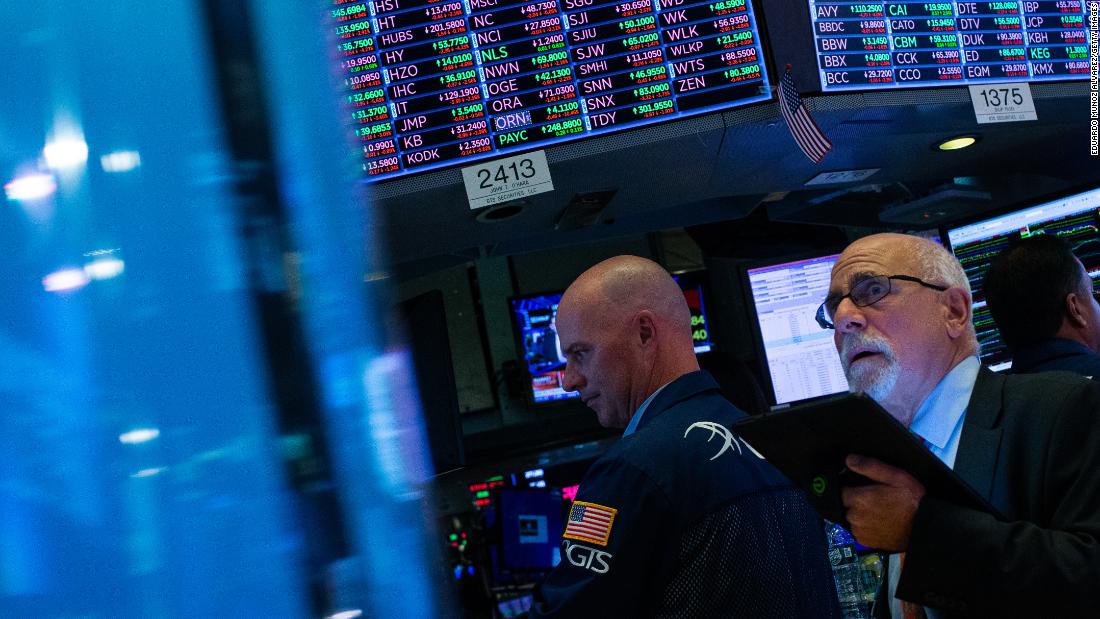
The Dow (INDU) rallied more than 1% Monday morning, up some 275 points. The S&P 500 (SPX) and the Nasdaq Composite (COMP) are meanwhile 0.9% and 1% higher.
All three stock indexes ended Friday in the red, logging their fourth down-week in a row.
China's Vice Premier Liu He said Monday that an escalation of the trade war would be bad for all parties and "the interest of the people in the world," while Trump said at the G7 summit in France "I think we're going to make a deal."
That also helped some of the European bourses higher, and the German Dax (DAX) and the French CAC 40 (CAC40) moved up. UK markets are closed for the summer bank holiday.
The trade spat between the world's two largest economies escalated Friday, when China announced new tariffs on $75 billion worth of US imports. Trump tweeted his frustration in response to the tariffs and sent the stock market lower. After Friday's closing bell, Washington announced a new round of tariffs on Chinese imports starting October 1.
Those $250 billion goods currently hit with a 25% levy, will be taxed at 30%, while the remaining $300 billion worth of imports will be hit with a 15% tariff instead of 10%.
Despite the trade war tensions, one economic indicator showed the US economy remains resilient: Durable goods orders for July climbed 2.1% on the month, much more than expected. Excluding transportation, the orders are up 0.4%.
But that was counterbalanced with the Chicago Fed National Activity Index, which slipped further in July. It was down 0.4% compared with a flat reading in June. A negative index number represents below-trend growth.
"We believe the Chicago Fed National Activity Index remains the best indicator to gauge US recession risks," wrote Win Thin, global head of currency strategy at Brown Brothers Harrison, in a note to investors.

Let's block ads! (Why?)


https://www.cnn.com/2019/08/26/investing/dow-stock-market-trade-today/index.html

2019-08-26 15:02:00Z
CAIiEP5GEPhkej3-TvVbZS9XUqUqGQgEKhAIACoHCAowocv1CjCSptoCMPrTpgU

China Lets Currency Sink to 11-Year Low Amid Trade Troubles - TIME

China Lets Currency Sink to 11-Year Low Amid Trade Troubles | Time

this link is to an external site that may or may not meet accessibility guidelines.

Let's block ads! (Why?)


https://time.com/5661299/china-yuan-donald-trump-trade/

2019-08-26 08:55:11Z
52780364462341

China trade war: Liu He calls for calm after Trump comments - Axios

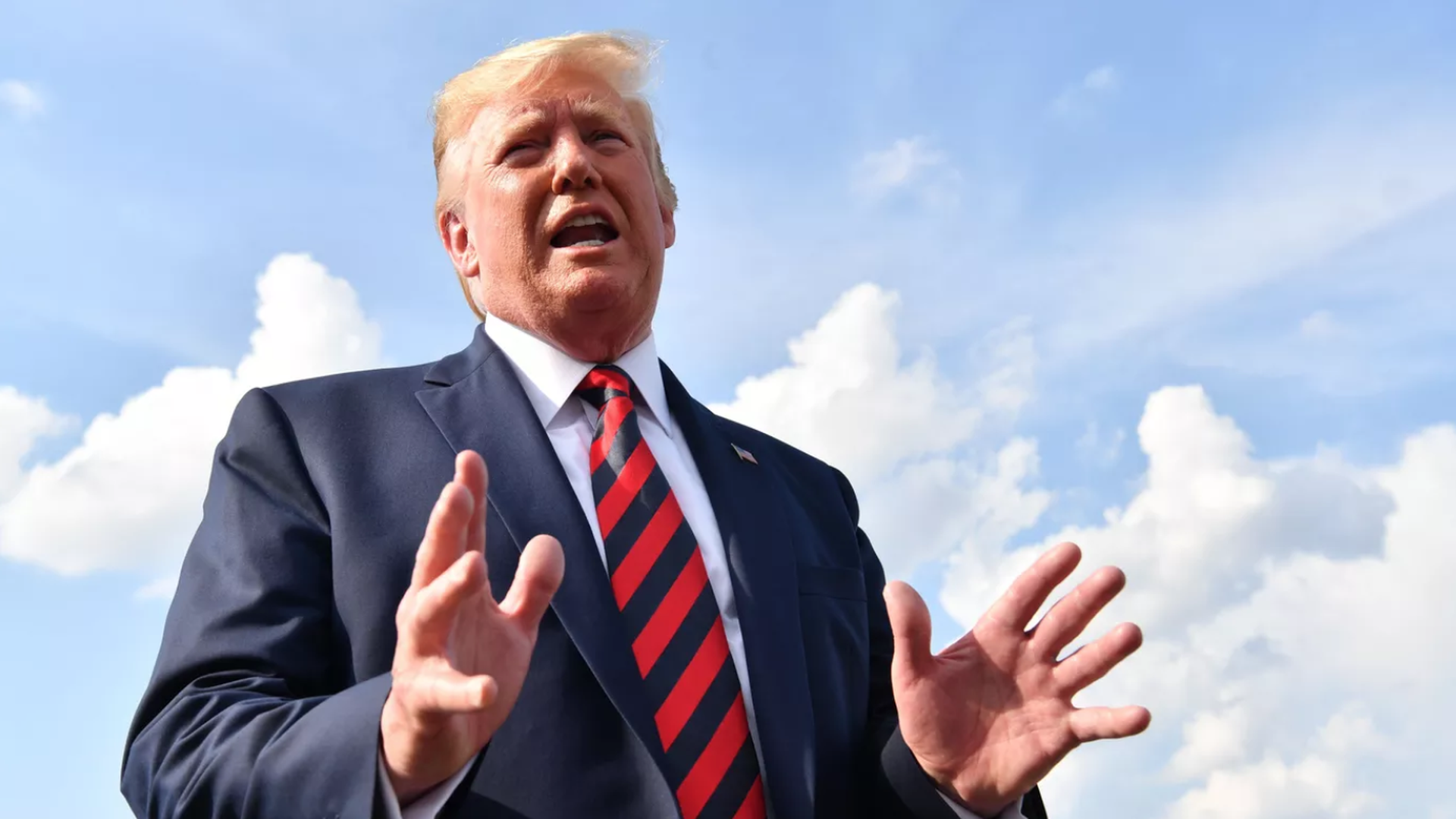
President Trump speaks with the media
Photo: Nicholas Kamm/AFP/Getty Images

President Trump said Monday China has requested for trade talks to resume.

Details: His comments came after China's economy czar, Vice Premier Liu He, said the Chinese government is willing to negotiate with the United States in a calm manner to resolve trade issues, Reuters reports.

QuoteWe are willing to resolve the issue through consultations and cooperation in a calm attitude and resolutely oppose the escalation of the trade war."
— Vice Premier Liu He comments, translated by Reuters

Driving the news: President Trump said Friday he would raise tariffs against China, hours after the Chinese government announced it would levy retaliatory duties on earlier U.S. action.

  • Trump ramped up tensions at the G7 summit in France on Sunday, telling reporters that he had "no plans right now" to follow through on his emergency declaration threat to force U.S. companies to leave China but added, "If I want, I could declare a national emergency."
  • And after telling reporters that he "might as well" have "second thoughts" about escalating the trade war, White House press secretary Stephanie Grisham clarified that Trump "regrets not raising the tariffs higher."

The big picture: China had vowed to continue fighting the trade war "until the end." But Reuters reports that Liu said at a tech conference in southwest Chongqing, "We believe that the escalation of the trade war is not beneficial for China, the United States, nor to the interests of the people of the world."

Editor's note: This article has been updated with new details throughout.

Go deeper:

Let's block ads! (Why?)


https://www.axios.com/china-trade-war-liu-he-calls-for-calm-resolution-after-trump-remarks-bc491d9d-0a4f-4be6-b478-a0c5934ee2a4.html

2019-08-26 05:43:00Z
CAIiEDlw40yoAuzKDZzaGyzTMhgqGQgEKhAIACoHCAowysWECzCkqIEDMI-qgwY